
Our History
The Irish Coast Guard has been protecting people for a very long time. Here is the story of how we grew from a small group of boat crews into the modern rescue team we are today.
Our Story
200 years of keeping Ireland’s coasts safe
The Preventive Water Guard
Before we were called the Coast Guard, there was a group called the Preventive Water Guard. Their purpose was to stop people from smuggling goods into the country without paying taxes. Members lived in watch houses along the coast and rowed boats out at night to patrol the dark waters.
A new name and new buildings
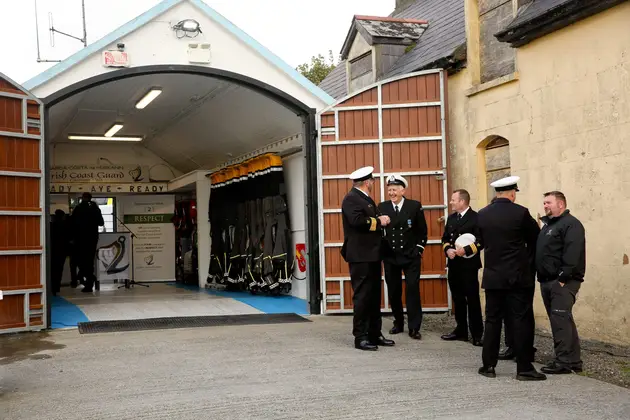
In January 1822, several different groups responsible for protecting the shoreline were joined together to create one single organisation. This new service was officially named the Coast Guard. To support the crews, a major building project began across the country.
Solid stone stations were constructed at key points all around Ireland’s coastline. These buildings were designed to be strong and long-lasting, providing a base for the teams to watch the sea and launch rescue missions. Remarkably, some of our modern teams in places like Tramore and Greenore still use these historic buildings as their headquarters today.
From smugglers to lifesavers
By the 1850s, smuggling along the coast had decreased significantly. Because there was less illegal trade to stop, the Coast Guard’s job began to change. While they still acted as a backup for the Navy, they started to focus much more on rescue missions. Instead of chasing criminals, they spent their time helping people and saving valuable goods when ships crashed onto the rocks.
Key fact: The breeches buoy
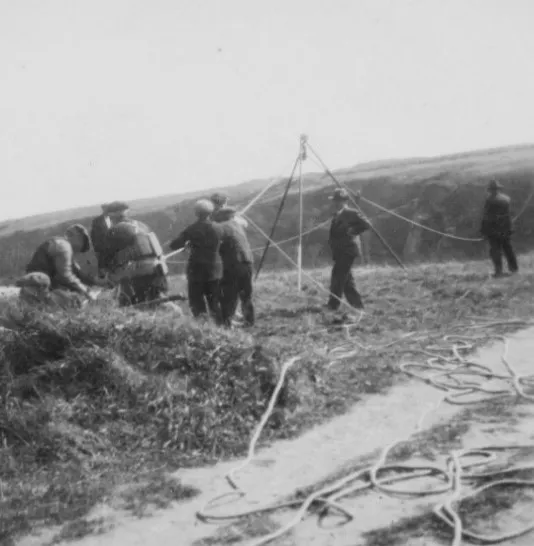
The breeches buoy was the primary life-saving equipment for over a century on Ireland’s coastline. This practice was used up until the 1970s and was eventually replaced by the helicopter and the winchman.During this time, the Coast Guard used a clever piece of equipment called the breeches buoy to rescue people from shipwrecks. It was a lifebuoy with a pair of canvas “trousers“ (breeches) attached. Rescuers would fire a line from the shore to the sinking ship using a rocket, then pull people to safety above the waves.
Stations all around Ireland
By 1860, there were about 200 Coast Guard stations around the Irish coast. These usually looked like a row of five or six houses where the crews lived. Many of these buildings are still standing today, though some were burned down during the War of Independence because they were seen as symbols of British rule.
The Coast Life Saving Service
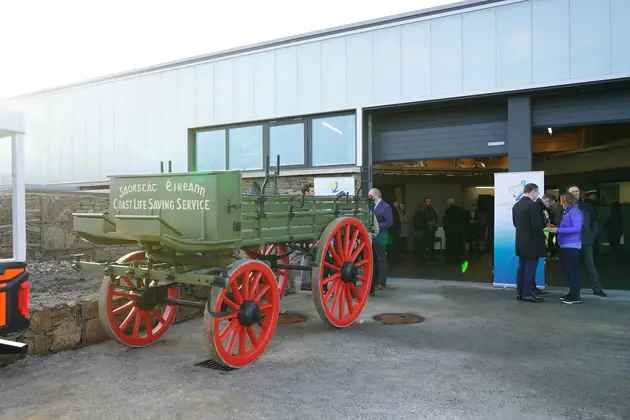
After Ireland became a Free State, the service was handed over to the new Irish government. It was renamed the Coast Life Saving Service. For many years, these teams used hand carts or horse-drawn ‘rocket carts’ to carry their gear. They used ladders for cliff rescues and the “breeches buoys” to pull people off sinking ships.
The “Rocket Houses”: During this time, the teams used special rockets to fire a lifeline out to ships in trouble. Because of this, many of the small buildings where the gear was kept are still called “Rocket Houses” by local people today. Volunteers trained every three months to make sure they were ready for any emergency.
A modern emergency service
Following a reformation into how we rescue people from the air and sea, the service was updated. It was renamed the Irish Marine Emergency Service. This was the start of the modern system we use today, making sure we have the best equipment to save lives.
The Irish Coast Guard
In February 2000, the name was changed one last time to the Irish Coast Guard. In the Irish language, we are called Garda Costa na hÉireann. This name perfectly describes what we do: we are here to protect anyone who goes on or near the water along Ireland’s coastline.
Celebrating 200 Years
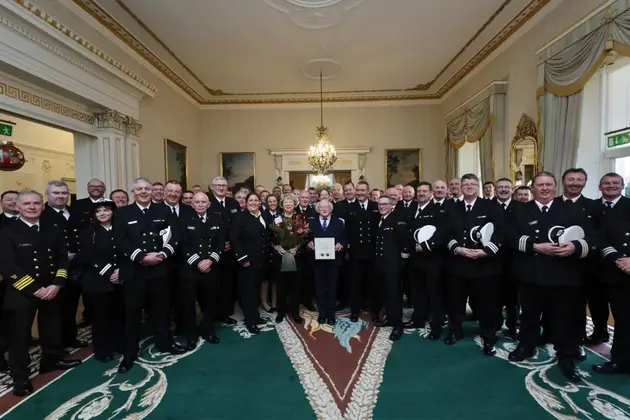
The Coast Guard celebrates 200 years in service with then president Michael D Higgins at Aras an Uachtarain.
In 2022, we celebrated our 200th birthday. Today, we are one of Ireland’s four main emergency services, working alongside An Garda Síochána, the Ambulance service, and the Fire service.
We now have over 950 volunteers and 130 full-time staff members. Our teams use helicopters, boats, and drones to find people who are lost or in difficulty. We also have an expansive radio system to listen and communicate with seafarers, and special equipment to clean up oil spills to keep our coastline safe and beautiful.